


Femina Miss India 2027 and 2028 Preparation Tips with The Tiara

A pageant audition doesn’t start on the audition day. It starts months before, when you decide how you want to walk, speak, think, and present your story. If you’re preparing for Femina Miss India 2027 or 2028, start now. Not because you need to become a different person. You don’t. You need time to become clear, confident, and consistent.
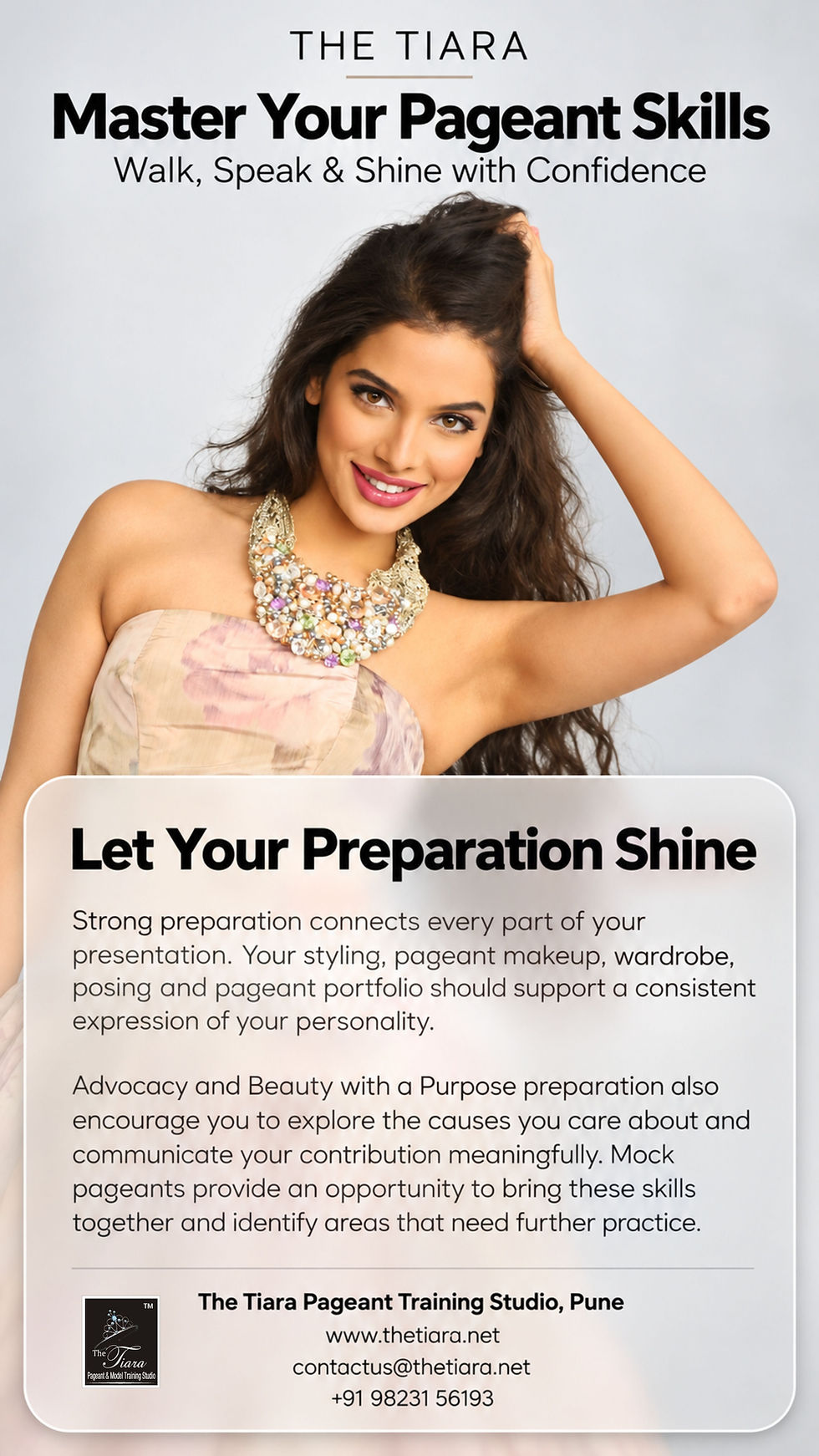
At The Tiara Pageant Training Studio in Pune, International Pageant Coach Ritika Ramtri helps aspirants build that readiness through structured training. The focus is simple: polish your presentation while keeping it true to your personality, experiences, and goals.

Start your preparation earlier than you think you need to
Early preparation gives you room to improve without panic. It also helps you understand what pageant preparation really includes.
Many aspirants begin with the visible parts: walk, styling, makeup, and photos. Those matter. But they’re only one part of the process.
A strong preparation plan should include:
Pageant walk and stage presence
Introduction practice
Interview and Q&A training
Current affairs and general awareness
Advocacy and personal cause clarity
Grooming and etiquette
Fitness and posture
Wardrobe planning
Portfolio preparation
Confidence building through repeated practice
Start with a simple weekly plan. Keep it realistic.
For example:
Focus area | Weekly practice idea |
Walk | Practise 20 to 30 minutes, 4 days a week |
Introduction | Record 3 versions and review your delivery |
Interview | Answer 5 questions aloud every week |
Awareness | Read credible news daily and note key points |
Advocacy | Build one clear cause statement and refine it |
Small, steady practice works better than last-minute pressure. It also helps you notice patterns. Maybe your walk is strong, but your answers feel rushed. Maybe your introduction has good content, but your voice lacks energy. Maybe you know your cause well, but can’t explain why it matters to you.
That’s where focused coaching helps. At The Tiara, personalised pageant coaching gives structure to your practice. Whether you’re preparing for your first audition or returning with past experience, your training can focus on the skills that need the most work.
Build a pageant introduction that judges remember
Your introduction is not a list of facts. It’s your first chance to show how you think, what you value, and what makes your journey worth listening to.
A weak introduction sounds like a biodata read aloud. A strong one connects your background, interests, achievements, and ambitions into a clear personal story.
Before writing your introduction, ask yourself:
What do I want the panel to remember about me?
Which life experiences shaped my confidence?
What achievement reflects my discipline?
What cause or ambition feels honest to me?
What words sound natural when I say them aloud?
Keep the language simple. Don’t use lines you wouldn’t say in real life. Judges hear many introductions. Forced phrases stand out, and not in a good way.
A strong introduction usually has three things:
Clarity
The listener should understand who you are without working hard.
Personality
Your words should sound like you, not like a template.
Purpose
The introduction should leave a clear impression of your values or direction.
Here’s a simple way to build it:
Start with your name and background.
Add one personal detail that reveals character.
Mention a meaningful interest, skill, or achievement.
Connect it to your ambition.
End with calm confidence.
Do not try to say everything. A pageant introduction is short. Choose details that serve a purpose.
At The Tiara, introduction training includes structure, pacing, expression, posture, and voice modulation. The goal is not to memorise a dramatic speech. The goal is to speak with ease and leave a real impression.
Strengthen your interview and Q&A skills
The interview round tests more than knowledge. It tests presence of mind, clarity, honesty, and awareness.
For FEMINA MISS INDIA preparation, interview practice needs to cover both personal and current topics. You may be asked about your background, education, ambition, opinion on social issues, role models, leadership, failures, or future plans.
Good answers are not always long. They’re clear.
A useful answer structure is:
State your point.
Explain why you think that.
Give a brief example if needed.
End cleanly.
For example, if asked about confidence, don’t give a vague answer like, “Confidence means believing in yourself.” That’s fine, but it’s too common.
A stronger answer might be:
“For me, confidence means being prepared enough to stay calm under pressure. I’ve learnt that confidence grows when I keep promises to myself, whether it’s showing up for practice or speaking honestly even when I’m nervous.”
That answer has meaning. It also feels personal.
To improve Q&A skills, practise these habits:
Answer out loud, not just in your head.
Time your answers so they don’t become too long.
Record yourself and check your tone.
Avoid memorising full answers.
Read the news, but also form your own view.
Learn to pause before answering.
A short pause is not a weakness. It shows thought. Rushing often leads to filler words and unclear sentences.
At The Tiara, mock interviews help aspirants practise under pressure. Feedback usually covers content, body language, eye contact, voice, and answer structure. This matters because what you say and how you say it work together.
Make your pageant walk look natural and controlled
A confident walk is not about copying someone else. It’s about control, posture, balance, rhythm, and expression.
Your walk should suit your body, height, outfit, footwear, and personality. If it looks forced, the impact drops.
Work on these basics first:
Posture
Keep your shoulders relaxed and your spine lifted. Good posture changes how your presence reads from a distance.
Balance
Practise turns, pauses, and exits. Many contestants focus only on walking forward. The turn and pose need equal attention.
Expression
Your face matters. A blank expression can make even a good walk look disconnected.
Control
Speed can ruin presentation. A rushed walk looks nervous. A slow walk without energy looks dull. Find the right pace.
Practise in the footwear you’ll use for auditions or similar styles. Don’t wait until the final week. Comfort takes time.
Also practise walking in different spaces. A studio floor, a corridor, and a stage can feel different. The more situations you experience, the less nervous you’ll be.
With PAGEANT COACHING, the walk becomes more than movement. It becomes part of how you communicate confidence.
Build awareness without sounding rehearsed
Current affairs matter because pageants look for informed young women who can think clearly. You don’t need to know everything. You do need to understand major issues and speak with maturity.
Focus on topics such as:
Women’s safety and education
Climate and sustainability
Health and mental well-being
Youth leadership
Digital behaviour and online safety
Indian culture, arts, and representation
Social change and community work
Don’t just collect facts. Ask yourself what you think.
For each topic, make short notes:
What is the issue?
Why does it matter?
Who is affected?
What can individuals or communities do?
What is my personal view?
This helps you avoid generic answers. Judges can tell when a contestant has memorised lines without understanding the subject.
Use credible news sources and official public information where possible. Avoid basing your views only on social media posts. Pageant answers should be thoughtful, not reactive.
Choose an advocacy cause that feels real
Your advocacy should not be chosen only because it sounds impressive. It should connect to your values, lived experience, learning, or long-term interest.
A good cause has three parts:
Personal connection
Clear issue
Practical action
For example, if your cause is education, make it specific. Are you focused on girls’ education, digital literacy, school retention, or career awareness? A specific cause is easier to explain and support.
Ask yourself:
Why does this cause matter to me?
What have I done so far?
What can I realistically do next?
How can I speak about it without sounding vague?
Even small action matters if it is sincere. Volunteering, awareness work, mentoring, research, or community participation can help you understand your cause better.
The key is consistency. A cause should not appear only in your introduction. It should connect with your answers, your goals, and your view of leadership.
Prepare your grooming and presentation with discipline
Grooming is not only makeup or hair. It includes hygiene, posture, body language, wardrobe choices, communication, and the way you carry yourself.
Start with basics:
Maintain skin and hair care routines that suit you.
Keep nails neat and clean.
Learn simple makeup that enhances your features.
Understand colours and silhouettes that suit your body.
Practise sitting, standing, entering, and exiting with grace.
Keep your wardrobe organised before auditions.
Don’t leave your portfolio for the last minute. A portfolio should reflect your current look and presentation. Rushed photos often show in posture, expression, and styling.
You don’t need a huge wardrobe. You need well-fitted, clean, occasion-appropriate clothing that helps you look polished.
Also pay attention to fitness, but keep the goal healthy. Pageant fitness should support stamina, posture, and confidence. Avoid extreme routines. Work with qualified professionals if you’re changing your fitness or nutrition plan.
Use feedback without losing your own voice
Feedback is useful only when you know how to process it. During preparation, many people may give opinions. Some will be helpful. Some will confuse you.
Learn to separate useful feedback from noise.
Useful feedback is specific. It sounds like:
“Your answer is strong, but the ending is unclear.”
“Your shoulders rise when you get nervous.”
“Your introduction has too many details.”
“Your walk improves when you slow down.”
Vague feedback sounds like:
“Be more confident.”
“Do something different.”
“You need more charm.”
That kind of feedback doesn’t tell you what to fix.
A coach helps you identify what matters now and what can wait. This keeps preparation focused. At The Tiara, training with Ritika Ramtri is designed to help contestants build skill without becoming artificial. The aim is a polished version of you, not a copied personality.
Keep checking your eligibility and official updates
Pageant preparation should run alongside practical checks. Rules, age criteria, documents, audition formats, and timelines can change. Always refer to the current official information when you get closer to applying.
Keep these ready in advance:
Valid identity documents
Education-related documents if required
Recent photographs
Basic profile details
Portfolio images
Introduction draft
Updated achievements and activities list
Don’t wait for the application window to open before organising your basics. When your documents and profile are ready, you can focus better on performance.
For 2027 and 2028 aspirants, this is the advantage of starting early. You can prepare your mind, body, communication, and materials without rushing.
A practical preparation timeline for the next two years
If your goal is 2027 or 2028, spread your work across phases.
Twelve to eighteen months before
Build foundations.
Start walk training.
Improve posture and fitness.
Read daily.
Explore possible advocacy causes.
Record your speaking practice.
Work on grooming habits.
Six to twelve months before
Refine your pageant profile.
Write and practise your introduction.
Begin mock interviews.
Build your portfolio plan.
Track current affairs.
Strengthen your cause work.
Review wardrobe needs.
Three to six months before
Practise under pressure.
Do timed Q&A sessions.
Practise complete audition-style entries.
Refine final introduction.
Update photographs.
Check official requirements.
Work on weak areas twice a week.
Final month
Reduce clutter.
Focus on consistency.
Sleep well.
Keep answers fresh, not memorised.
Do light walk practice.
Review key current topics.
Prepare documents and outfits in advance.
The goal is to arrive prepared, not exhausted.
FAQ
When should I start preparing for Femina Miss India 2027 or 2028?
Start as early as possible, ideally 12 to 18 months before you plan to apply. Early preparation gives you time to improve your walk, speaking, awareness, grooming, and confidence without rushing.
Can beginners train at The Tiara?
Yes. Beginners can start with the basics, including posture, walk, introduction, interview skills, and grooming. Training can also help experienced contestants refine specific areas.
What should I include in my pageant introduction?
Include your name, background, a meaningful personal detail, one or two relevant achievements or interests, and a clear sense of ambition. Keep it natural and easy to understand.
How can I improve my pageant interview answers?
Practise aloud, record yourself, read current affairs, and learn to structure answers clearly. Avoid memorising long responses. Focus on honest, thoughtful answers with examples.
Is pageant coaching necessary?
It isn’t compulsory, but it can help. Good coaching gives structure, feedback, and regular practice. It also helps you understand how to present your personality with more confidence and clarity.
Your preparation starts with one honest step
A crown is not won by one perfect answer or one strong walk. It comes from steady preparation, self-awareness, discipline, and the courage to keep improving.
If you’re serious about competing in 2027 or 2028, start with the basics today. Write your first introduction. Record one answer. Practise your walk. Read the news. Review your goals. Then build from there.
With guidance from The Tiara Pageant Training Studio, Pune, and International Pageant Coach Ritika Ramtri, your preparation can become clearer, sharper, and more personal. Start early, stay consistent, and let your presentation reflect who you are becoming.
www.thetiara.net | contactus@thetiara.net | +91 98231 56193


Comments